
Custom hardware development and manufacturing
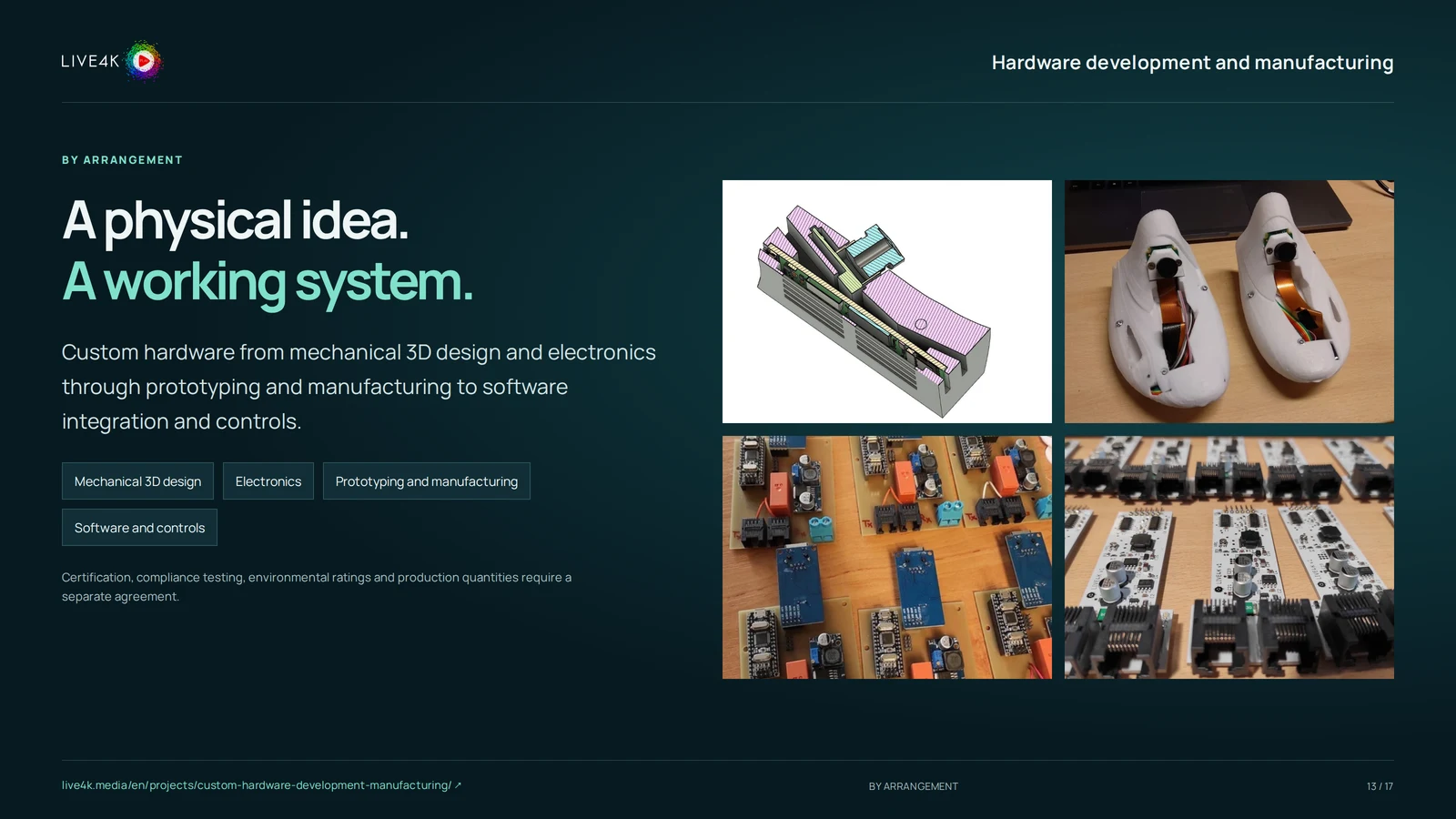
Custom hardware from mechanical 3D design and electronics through prototyping and manufacturing to software integration and controls.
PURPOSE AND VALUE
Hardware development and manufacturing: purpose and audience.
We connect mechanical design, electronics and software when creating a physical device. Work can run from an initial concept through a prototype to an agreed manufacturing and operating setup.
A device only works as a whole when its enclosure, electronics, firmware or application and controls fit together. Developing those relationships together helps expose practical constraints earlier.
Who it is for
- Businesses needing a purpose-built device
- Teams developing monitoring or control equipment
- Projects that connect physical processes with software
When it is useful
When a standard device does not fit your process, or an idea needs a practical prototype and a route to further development.
Where it works
In development and prototyping environments, followed by the agreed manufacturing or installation context.
CAPABILITIES
What the solution can do.
Mechanical 3D design
Prepare the physical design around the intended use and assembly.
Based on the project presentation; we will confirm the specific scope.Electronics
Develop the electronic part within the agreed scope.
Based on the project presentation; we will confirm the specific scope.Prototyping and manufacturing
Move from an initial prototype towards an explicitly defined production step.
Based on the project presentation; we will confirm the specific scope.Software and controls
Connect the device to the required application, interface or operating workflow.
Based on the project presentation; we will confirm the specific scope.USE CASES
How it could help in practice.
Example situations the solution can support. We define the specific scope and expected value around your requirements.
Industrial and service businesses
Connect a physical process to an application
Design the device, data path and controls together.
Expected benefitA more coherent physical-to-digital workflow.
Product teams
Test an idea before the next investment
Build a scoped prototype and evaluate agreed functions.
Expected benefitEvidence for the next design decision.
FROM INPUTS TO OUTCOMES
How it works.
We connect mechanical design, electronics and software when creating a physical device. Work can run from an initial concept through a prototype to an agreed manufacturing and operating setup.
- 01
Define use and constraints
Agree the environment, function and intended users.
- 02
Design the parts
Plan mechanics, electronics, software and their interfaces.
- 03
Build and assess a prototype
Check the agreed functions and identify changes.
- 04
Prepare the next stage
Agree further development, manufacturing and operating responsibilities.
Inputs, outputs and components
What goes in
Project brief
A concrete use case, operating environment and functional priorities This input is needed for delivery.
Requirements and responsibilities
Agreed acceptance criteria and access to the relevant process or installation This input is needed for delivery.
What comes out
Agreed outcome
Design and prototype deliverables within scope
As specified in the project agreement.
Handover
Agreed manufacturing, integration or operating preparation
As specified in the project agreement.
Components
Mechanical 3D design
Prepare the physical design around the intended use and assembly.
Electronics
Develop the electronic part within the agreed scope.
Prototyping and manufacturing
Move from an initial prototype towards an explicitly defined production step.
Software and controls
Connect the device to the required application, interface or operating workflow.
CONNECTIONS AND FORMATS
How it fits your environment.
Software applicationsProposed connection
Define the data, control interface and operating responsibilities for the device.
Connection requirements
- Confirm the actual interface, permissions and scope before implementation.
What needs a separate agreement
- Compatibility with every third-party system is not implied.
Existing equipmentProposed connection
Check electrical, mechanical and protocol compatibility for the specific connection.
Connection requirements
- Confirm the actual interface, permissions and scope before implementation.
What needs a separate agreement
- Compatibility with every third-party system is not implied.
PREPARATION AND HANDOVER
What we need to agree.
Start with a short conversation about your intended outcome, the existing environment and a useful first scope.
What we need from you
- A concrete use case, operating environment and functional priorities
- Agreed acceptance criteria and access to the relevant process or installation
Prerequisites
- A concrete use case, operating environment and functional priorities
- Agreed acceptance criteria and access to the relevant process or installation
What our team provides
- Design and prototype deliverables within scope
- Agreed manufacturing, integration or operating preparation
What we check at handover
- Review the agreed functions and deliverables against the project brief.
- Confirm relevant interfaces, responsibilities and limitations.
Engagement model and delivery scope
Ways to work together
- Project scope agreed individually.
Operating model
- Operating model and responsibilities agreed for the actual use case.
What affects the scope
- Certification, compliance testing, environmental ratings and production quantities require a separate agreement.
- A prototype is not automatically a certified serial product.
- Component availability, manufacturing methods and installation constraints affect the scope.
Questions for the first conversation
- What outcome should the project support?
- What environment and constraints apply?
- Who will review the result and manage its use?
Scope, availability and conditions
- Certification, compliance testing, environmental ratings and production quantities require a separate agreement.
- A prototype is not automatically a certified serial product.
- Component availability, manufacturing methods and installation constraints affect the scope.
What is not automatically included
- Certification, compliance testing, environmental ratings and production quantities require a separate agreement.
- A prototype is not automatically a certified serial product.
- Component availability, manufacturing methods and installation constraints affect the scope.
FREQUENTLY ASKED QUESTIONS
Questions you may have.
Can you also build the software?
Yes, software and controls can be designed with the hardware as part of the agreed project.
Does a prototype include certification?
Not automatically. Required standards, testing and certification responsibilities must be included explicitly.
LET’S TALK
Let’s discuss working together.
Choose a time for a short call. We will start with this project and discuss your needs, constraints and next steps.
We will agree the specific scope and delivery options around your requirements.
The call booking form is loading. If it does not load, email us or call +420 773 749 040.